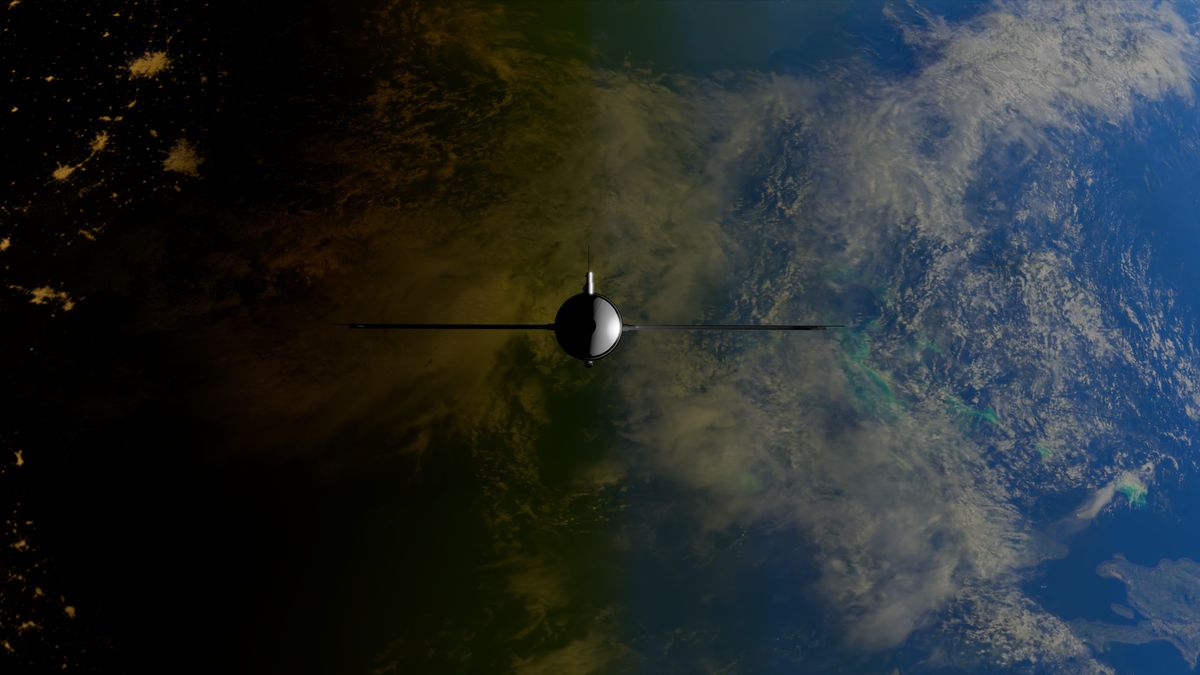
The U.S. Federal Communications Commission (FCC) has reportedly granted approval for a significant new space venture: the testing of a large space mirror designed to illuminate the night sky. This development, spearheaded by the company Reflect Orbital, has been met with considerable debate, particularly from the scientific community.
According to The New York Times, the FCC’s decision comes despite an “outcry” regarding the project. The mirror’s primary function is to test the concept of providing “sunlight on demand,” a development that some observers have noted contributes to a growing strangeness in Low Earth orbit, as reported by The Conversation.
Background
The concept of using orbiting mirrors to manipulate light has been a subject of discussion for some time. This latest approval by the FCC, as detailed by PCMag UK, permits Reflect Orbital to proceed with testing their space mirror satellite. The ambition behind the project is to explore the feasibility of lighting specific areas of Earth from space, effectively creating ‘sunlight on demand’ even during nighttime hours.
The move highlights the increasing commercialisation and diversification of activities within Low Earth orbit, which is becoming an increasingly crowded and dynamic environment. New ventures such as this raise questions about the long-term implications for space traffic, light pollution, and the very nature of our night sky.
The Approval and Opposition
The FCC’s decision marks a critical step for Reflect Orbital, allowing them to advance their controversial project. While the approval facilitates the potential for innovative applications, it has simultaneously ignited strong opposition. PCMag UK highlighted that this space mirror satellite is one that “astronomers hate.”
The primary concern voiced by astronomers stems from the potential for increased light pollution. Artificial light in the night sky, whether from ground sources or orbiting objects, can severely impede astronomical observations. Reflections from large orbital structures could interfere with telescopes, making it more challenging to study distant stars, galaxies, and other celestial phenomena. The prospect of additional bright objects in Low Earth orbit adds another layer of complexity for researchers reliant on clear, dark skies for their work.
FAQ
Here are some frequently asked questions regarding the FCC’s approval of the space mirror:
- Q: What has the FCC recently approved?
A: The FCC has approved a test of a space mirror designed to light the night sky.
- Q: What is the main purpose of this space mirror?
A: The mirror is intended to test the concept of providing “sunlight on demand” or lighting the night sky.
- Q: Which company is behind this space mirror project?
A: The company behind the project is Reflect Orbital.
- Q: Who is particularly concerned about this approval?
A: Astronomers have expressed significant opposition and concern regarding the space mirror’s potential impact.
What this means for you
For London and UK news readers, the FCC’s approval of Reflect Orbital’s space mirror, while a U.S. regulatory decision, signals a potentially far-reaching shift in how humanity interacts with space. The prospect of ‘sunlight on demand’ could one day have implications for agriculture, disaster relief, or urban lighting, but these are speculative future applications of a test project.
More immediately, the concerns raised by astronomers about increased light pollution and interference with observations are global. Even if the test project is localised, the precedent set and the increasing activity in Low Earth orbit could eventually affect views of the night sky from anywhere in the world, including the UK. It prompts a broader conversation about the stewardship of Earth’s orbital environment and its impact on scientific research and our shared natural heritage, the dark sky.







Comments are off for this post.