Recent reports have highlighted forthcoming solar eclipse events impacting parts of the UK and Ireland, alongside details of a significant Nasa air mission set to capture rare data from a total solar eclipse in Iceland in 2026. These celestial phenomena continue to draw attention, with discussions spanning from regional viewing opportunities to cutting-edge scientific investigations.
The BBC has provided coverage regarding a solar eclipse in Yorkshire, with their report, titled ‘Solar eclipse in Yorkshire: When is it and how can I view it?’, addressing both the timing of the event and methods for its observation. Simultaneously, another BBC report indicated that the ‘most of sun to be eclipsed across island of Ireland’ during a separate solar eclipse event.
Further afield, The Guardian has detailed an ambitious Nasa air mission dedicated to capturing unprecedented data. This mission is centred around a total solar eclipse in Iceland, an event anticipated for August 9, 2026, with scientists particularly interested in sun nanoflares.
Background
Solar eclipses are among the most striking astronomical occurrences, where the Moon passes between the Sun and Earth, obscuring the Sun’s light either partially or entirely. The nature of these events can vary significantly, as evidenced by recent reporting.
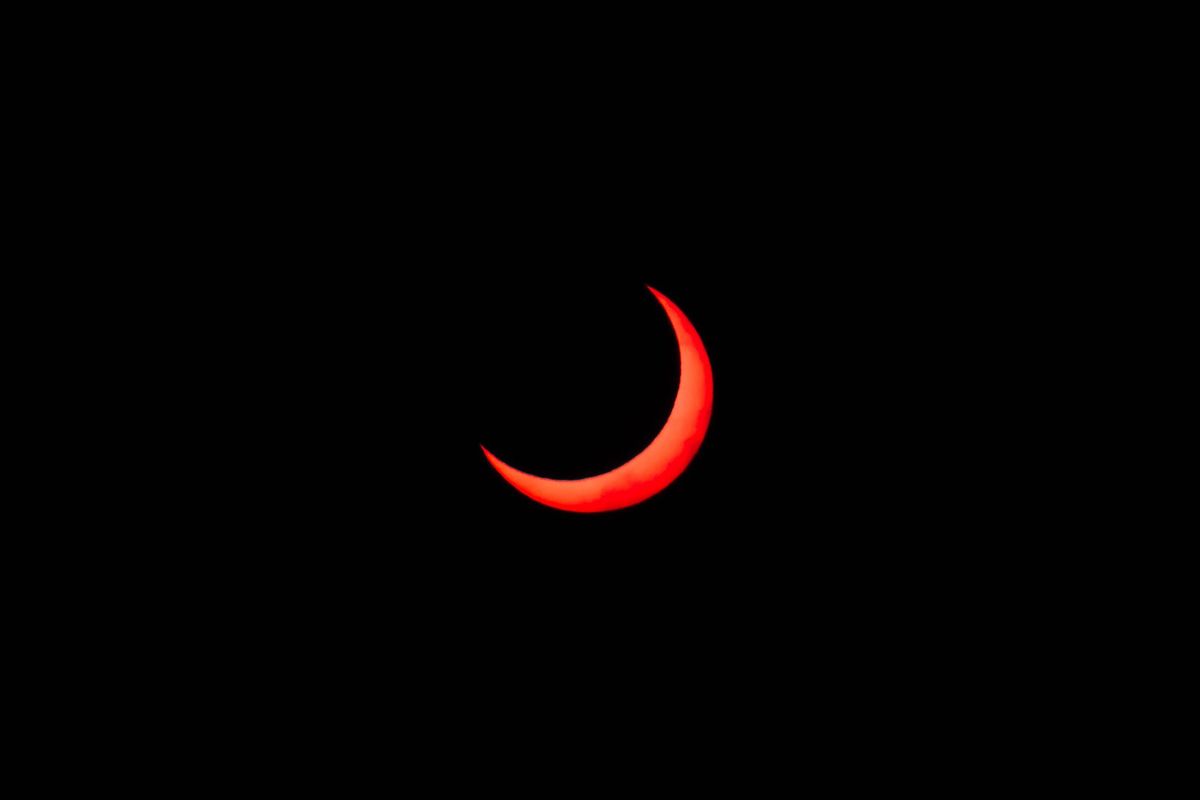
For instance, a BBC report noted that for a solar eclipse across the island of Ireland, it is expected that ‘most of sun to be eclipsed’, indicating a substantial but not complete obscuration of the solar disc. This type of event, known as a partial solar eclipse, allows observers to witness a significant portion of the Sun covered by the Moon.
In contrast, a total solar eclipse, such as the one in Iceland being targeted by a Nasa mission, involves the complete blocking of the Sun’s face. The Guardian’s report vividly described the experience of a total eclipse, quoting that ‘You’re hit with a slam of shadow’ as the moon fully obscures the sun. These profound moments offer unique opportunities for both public observation and scientific study.
Reports on UK and Ireland Events
Across the British Isles, two distinct solar eclipse events have been brought to public attention through BBC reporting. One report specifically focused on Yorkshire, generating interest in local viewing possibilities.
The article, titled ‘Solar eclipse in Yorkshire: When is it and how can I view it?’, indicated that the BBC had provided information on the timing of this eclipse and guidance on how it could be observed. While the specifics of the viewing methods were not detailed in the available summary, the report’s title underscores the public’s keen interest in experiencing such astronomical events.
Separately, for those on the island of Ireland, BBC coverage highlighted another solar eclipse where ‘most of sun to be eclipsed’. This suggests a widespread and noticeable celestial display for residents across the region, offering a chance to witness a significant portion of the Sun’s surface being temporarily obscured by the Moon. The geographical spread of these reports illustrates the widespread impact and interest generated by solar eclipses.
Nasa’s Mission and Future Eclipses
Beyond immediate regional events, significant scientific endeavours are also being planned around future solar eclipses. The Guardian reported on a notable Nasa air mission, which is being meticulously organised to capture critical data from a total solar eclipse.
This mission is specifically focused on an eclipse scheduled for August 9, 2026, over Iceland. According to The Guardian’s report, the primary objective of this ambitious undertaking is to study ‘sun nanoflares’. Nanoflares are incredibly small, energetic bursts on the Sun’s surface, and observing them during the brief period of a total solar eclipse provides unique conditions for scientific investigation.
The mission aims to leverage the rarity of a total eclipse, where the ‘slam of shadow’ creates an unparalleled viewing environment for advanced instrumentation. Such research contributes significantly to our understanding of the Sun’s complex atmosphere and its broader effects on our solar system. The planning for such an event, nearly two years in advance, highlights the scientific community’s dedication to capitalising on these infrequent celestial alignments for groundbreaking research.
FAQ
-
What have recent reports indicated about solar eclipses affecting the UK and Ireland?
Recent reports from the BBC have highlighted solar eclipse events. One report, titled ‘Solar eclipse in Yorkshire: When is it and how can I view it?’, focused on an eclipse in Yorkshire. Another BBC report specified that ‘Most of sun to be eclipsed across island of Ireland’ during a solar eclipse event there.
-
The Guardian has reported on a Nasa air mission designed to capture rare eclipse data. This mission is associated with a total solar eclipse occurring in Iceland, scheduled for August 9, 2026, and is aimed at investigating sun nanoflares. The report noted that during such an event, ‘You’re hit with a slam of shadow’.
-
When is the total solar eclipse in Iceland, which is the focus of a Nasa mission, expected to occur?
The total solar eclipse in Iceland, which a Nasa air mission aims to capture data from, is expected on August 9, 2026, according to The Guardian’s reporting.
What this means for you
For London and UK news readers, these reports underscore the dynamic nature of celestial events and their impact, both locally and globally. While specific details on direct viewing guidance for the reported UK and Ireland eclipses were addressed in BBC coverage, the broader news highlights the ongoing scientific and public interest in solar phenomena. The mention of eclipses in Yorkshire and across the island of Ireland means that such events are relevant to different regions, encouraging a general awareness of upcoming astronomical occurrences. Meanwhile, the detailed reporting on Nasa’s mission in Iceland offers a glimpse into how total solar eclipses contribute to cutting-edge scientific research, even if remote. Staying informed about these reports allows for a better appreciation of the natural world and the scientific efforts dedicated to understanding it.








Comments are off for this post.