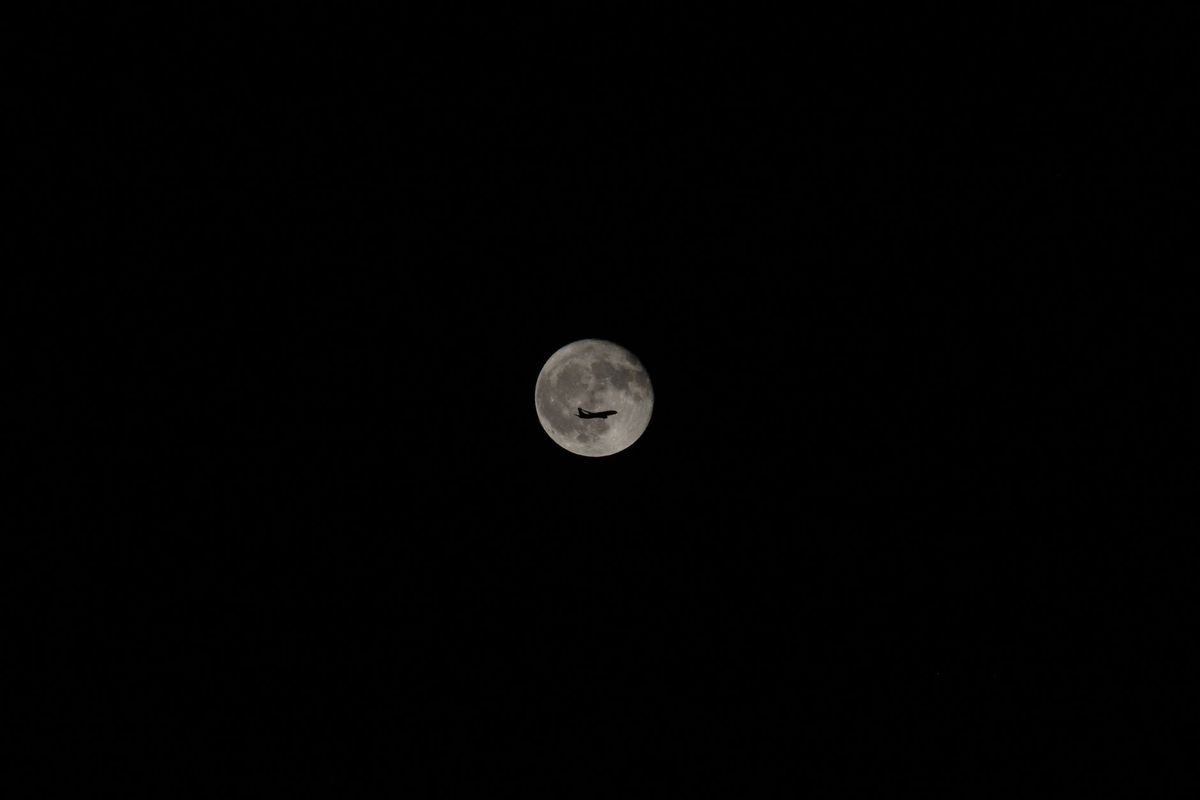
The full ‘Buck Moon’ is poised to illuminate UK skies tonight, offering a significant celestial spectacle. Reports from the BBC indicate that this full moon has already been observed “lighting up Devon and Cornwall skies,” signalling its presence across various parts of the country. Described by Live Science as potentially presenting an orange hue as it ascends, this particular full moon event is not just a visual treat but also marks the beginning of a notable period in the astronomical calendar, preceding a series of both solar and lunar eclipses. Stargazers and general observers alike across London and the wider UK will have the opportunity to witness this natural phenomenon.
Background
The designation ‘Buck Moon’ refers to a specific full moon, traditionally associated with the time of year when male deer (bucks) begin to grow new antlers. This natural cycle provides a cultural context to the astronomical event. According to Forbes, the appearance of this full ‘Buck Moon’ is particularly significant as it “rises to set up a total solar eclipse.” This highlights its role not merely as an isolated event but as a precursor to more dramatic celestial alignments. Live Science further corroborates this by stating that catching this potentially “orange ‘Buck Moon’ rise tonight” occurs “before a month of solar and lunar eclipses.” This sequence of events makes the current full moon a point of interest for those tracking astronomical phenomena.
The ‘Buck Moon’s’ Appearance Across the UK
The visual characteristics of tonight’s full moon are a key aspect of its appeal. Live Science anticipates that the ‘Buck Moon’ could appear distinctly “orange” as it rises, a common optical effect due to the scattering of light through the Earth’s atmosphere when the moon is low on the horizon. This specific visual detail adds to the allure of the event for observers across the UK. Already, the BBC has confirmed the moon’s early visibility, reporting that it has been “lighting up Devon and Cornwall skies.” This early observation suggests that clear skies permitting, many more regions across the country, including major urban centres and rural areas, will also experience the clear view of the ‘Buck Moon’. The widespread nature of its visibility makes it an accessible event for a broad audience.
A Precursor to Significant Eclipses
Beyond its immediate visual impact, the ‘Buck Moon’ carries deeper astronomical significance as a precursor to upcoming eclipse events. As detailed by Forbes, the rising of the full ‘Buck Moon’ is explicitly stated to “set up a total solar eclipse.” This connection positions tonight’s moon as an important marker in the celestial calendar. Reinforcing this point, Live Science highlights that the opportunity to “catch an orange ‘Buck Moon’ rise tonight” takes place “before a month of solar and lunar eclipses.” This implies that the ‘Buck Moon’ is not an isolated occurrence but rather the initial event in a sequence of significant astronomical displays, setting the stage for future sky-gazing opportunities involving both solar and lunar phenomena. The anticipation of these subsequent events adds another layer of interest to tonight’s full moon.
FAQ
- Q: What is the ‘Buck Moon’?
A: The ‘Buck Moon’ is the traditional name given to a specific full moon event. It is also significant this year as it precedes a month of solar and lunar eclipses, as noted by Live Science.
- Q: Where in the UK will the ‘Buck Moon’ be visible tonight?
A: The ‘Buck Moon’ is expected to be widely visible across the UK. The BBC has already reported it “lighting up Devon and Cornwall skies,” suggesting that, weather permitting, it will be observable in many regions.
- Q: What unique characteristics might the ‘Buck Moon’ display tonight?
A: According to Live Science, observers might “catch an orange ‘Buck Moon’ rise tonight,” due to atmospheric effects when the moon is low on the horizon.
- Q: How is the ‘Buck Moon’ connected to other astronomical events?
A: Both Forbes and Live Science highlight that the ‘Buck Moon’ rises “to set up a total solar eclipse” and precedes “a month of solar and lunar eclipses,” making it an important celestial marker.
What this means for you
For readers across London and the UK, tonight presents a unique and easily accessible opportunity to engage with a notable natural phenomenon: the full ‘Buck Moon’. This isn’t just another full moon; it’s one that Live Science suggests could appear with a striking orange hue as it ascends. More than just a beautiful sight, the ‘Buck Moon’ also serves as an intriguing curtain-raiser for a series of more significant astronomical events, specifically “a month of solar and lunar eclipses,” as reported by Live Science. Whether you are in a bustling city or a quieter rural setting, looking up tonight offers a chance to connect with the cosmos, witnessing a spectacle that has already been observed “lighting up Devon and Cornwall skies,” according to the BBC. It’s a straightforward, public event that requires no special equipment, simply an awareness of the skies above.








Comments are off for this post.